
 Skip to content
 An analysis of how the Amazon agreements redefine the rules of the game, prioritize conservation, and demand a new professionalization of the sector.
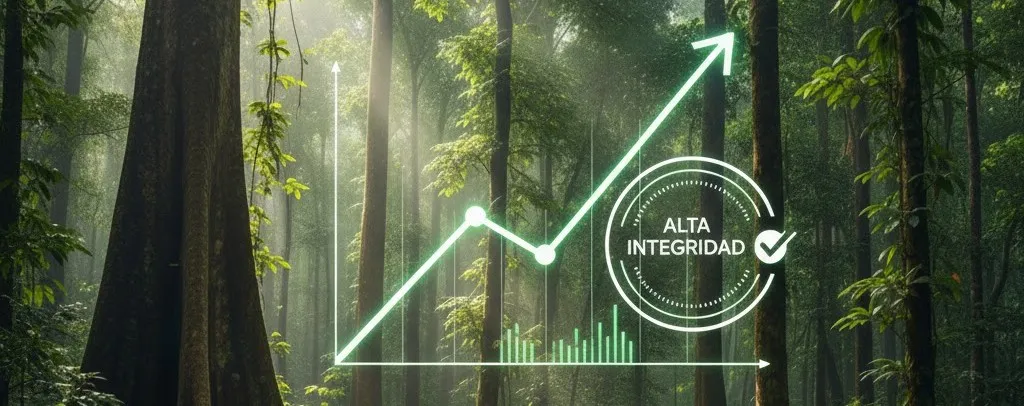
COP30 in Belém (2025) marked a historic turning point. Beyond the technicalities, the agreements signed in the heart of the Amazon (Road Map COP30) change the philosophy of carbon markets: from a system based on low-cost offsetting to one driven by environmental integrity, social legitimacy, and demonstrable real impact.
By 2026, the market will have transformed, generating gradual changes with positive results for all stakeholders working under the High Integrity framework. This article analyzes the key results and explains why adaptation requires in-depth, specialized knowledge.
Article 6 of the Paris Agreement establishes a centralized international registry to ensure transparency and prevent double counting. The new "Authorization Certificate" designates host governments as guarantors of the environmental integrity of each exported credit.
This eliminates ambiguity and the risk of double counting, providing legal certainty and transparency to international transactions. By 2026, government authorization will be the critical filter separating high-integrity loans (with access to premium markets and demanding corporate buyers) from basic loans, relegated to a lower-value, less liquid segment.
While initially it will be a requirement for the regulated market, it will ultimately be fundamental for the voluntary market of Premium projects.
This landmark agreement establishes that the fair sharing of benefits with local and indigenous communities is a non-negotiable principle. Contrary to what has been misinterpreted, it does not establish a universal fixed percentage (10%, 20%, 30% of revenues), but rather requires that this benefit be significant, formally agreed upon, and proportional to the type of project and the community context, and that it generate real, measurable benefits for the communities over time.
The spirit of the Belem Pact and the new rules of Article 6 generate a radical change: The conservation of intact ecosystems (primary forests, peatlands, mangroves) se posiciona sobre la reforestación o recuperación de áreas degradadas.
Because? It is ecologically and economically more efficient to prevent the massive release of carbon stored for centuries than to try to recapture it decades later. Furthermore, the ecosystem services of mangroves, wetlands, and peatlands, which have a high positive impact on nature and nearby communities, are not replaced when these habitats have been destroyed; they are simply lost forever.
Impact: REDD+ (conservation) and blue carbon (mangroves, wetlands, peatlands) projects that meet the pillars of integrity, governance and community benefits will become the most sought-after and valuable ("Premium") assets in the market.
The relationship with communities (Free, Prior and Informed Consent - FPIC) and with the government (for the Authorization Certificate) will be as critical as technical feasibility. Well-structured conservation projects will have an overwhelming competitive advantage. Documentation and transparency will be key.
Due diligence must assess not only carbon emissions, but the entire integrity package: state authorization, community benefits agreements, biodiversity impact, and robust additionality. Purchasing credits without these credentials will pose an unacceptable reputational risk.
Liquidity and price premiums will be concentrated in the "High Integrity" segment. Identifying projects with the potential to obtain authorization and quality seals will be the core of a successful investment strategy.
COP30 raised the bar to a level where improvisation and superficial knowledge come at a prohibitive cost. The 2026 rules reward technical, legal, and social expertise and penalize a lack of preparedness. Understanding the complexity of the new Article 6 framework, designing meaningful and contextual benefit-sharing agreements, navigating the government authorization process, and assessing the legal and financial risks of conservation projects will no longer be optional but the minimum requirement for operating.


CEO & Founder of Zero Carbono
 #!trpst#trp-gettext data-trpgettextoriginal=1303#!trpen#Optimized by #!trpst#trp-gettext data-trpgettextoriginal=1302#!trpen#Seraphinite Accelerator#!trpst#/trp-gettext#!trpen##!trpst#/trp-gettext#!trpen#